|
Why Some Age Spots Respond Better to Treatment Than Others | ||||||
|
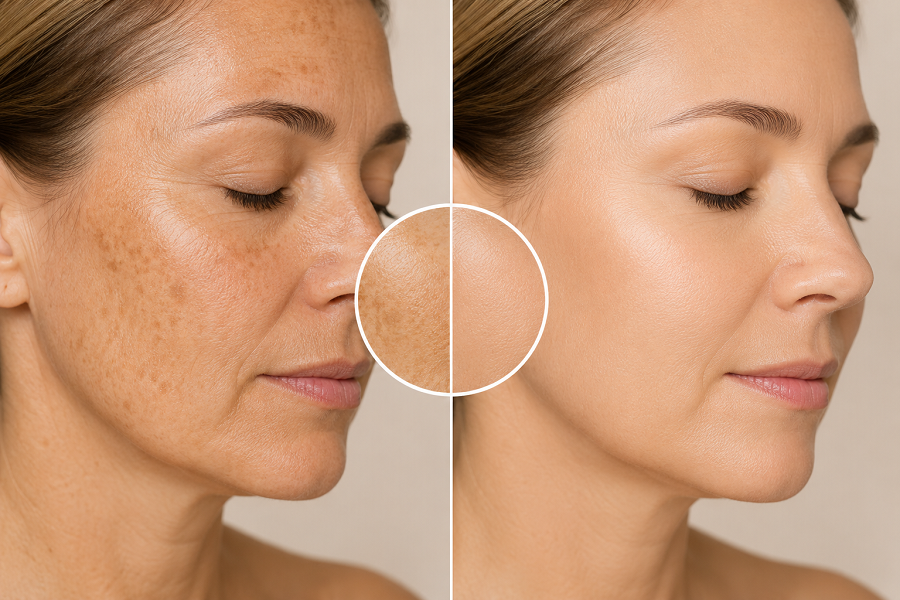
Age spots are often grouped together as a single cosmetic concern, yet not all pigmentation behaves the same way. Two individuals may have similar-looking dark spots on the skin, but the underlying characteristics of those lesions can influence how they respond to treatment. Factors such as pigment depth, sun exposure history, skin type, and lesion composition all play a role in treatment outcomes. As interest in non-surgical skin rejuvenation continues to grow, understanding the science behind age spots can help individuals make more informed decisions about skin care and cosmetic procedures. What Exactly Are Age Spots?Age spots, often referred to as solar lentigines or sun spots, are areas of increased pigmentation that develop after years of ultraviolet (UV) exposure. They commonly appear on skin that receives frequent sunlight, including the face, hands, shoulders, chest, and forearms. Unlike freckles, which may fade when sun exposure decreases, age spots tend to remain visible because they result from long-term changes in pigment-producing cells known as melanocytes. Several factors can contribute to their formation:
Although age spots are generally harmless, any new, changing, or irregular pigmented lesion should be assessed by a dermatologist to rule out more serious conditions. Why Pigment Depth MattersOne of the most overlooked factors in pigmentation treatment is depth. Not all pigment sits at the same level within the skin. Superficial pigmentation located closer to the epidermis often responds differently than deeper pigment deposits extending into lower skin layers. This distinction helps explain why some spots fade rapidly while others require additional treatment sessions or alternative approaches. Skin assessments frequently examine:
A detailed evaluation helps determine which treatment method may be most appropriate for the specific type of pigmentation present. For certain superficial pigmented lesions, targeted freezing technologies are often discussed as a treatment option due to their ability to focus treatment on isolated areas without affecting surrounding skin. How Cryotherapy Targets Pigmented LesionsCryotherapy has been used in dermatology for decades to address a variety of benign skin lesions. The principle is straightforward: controlled cold temperatures are applied to targeted tissue, triggering cellular destruction while allowing healthy surrounding skin to remain intact. Modern cryotherapy devices provide far greater precision than traditional methods. Controlled application allows practitioners to focus treatment on specific pigmented areas while minimizing unnecessary tissue damage. This approach is commonly considered for selected forms of superficial pigmentation, particularly when lesions are well-defined and localized. Treatments such as CryoPen age spot removal are frequently discussed because they use targeted cryotherapy technology to address specific pigmented lesions with a high degree of precision. The effectiveness of treatment often depends on proper lesion assessment, which is why clinical evaluation remains an important part of the treatment process. Research in dermatologic cryotherapy continues to explore how targeted freezing technologies interact with melanocyte activity and pigment distribution within the skin. Skin Tone and Treatment ResponseSkin type can significantly influence treatment planning. Individuals with darker skin tones may have a greater risk of post-inflammatory pigmentation changes after certain procedures. For this reason, practitioners often evaluate: Existing Pigmentation PatternsAreas with uneven pigmentation may respond differently compared to isolated age spots. Sun Exposure HabitsOngoing UV exposure can contribute to recurrence or the development of new lesions after treatment. Healing CharacteristicsSkin healing responses vary considerably between individuals and can affect final cosmetic outcomes. These factors help shape realistic expectations and support safer treatment decisions. Common Misconceptions About Age Spot RemovalMany people assume that all pigmentation is identical and can be treated with the same method. In reality, several conditions can resemble age spots, including:
Accurate diagnosis is one of the most important steps before any cosmetic treatment is considered. A comprehensive skin assessment often provides valuable information about whether pigmentation is likely to respond well to targeted procedures or whether alternative approaches may be more suitable. Protecting Results After TreatmentSuccessful treatment is only one part of long-term skin management. Continued UV exposure remains one of the leading causes of pigmentation recurrence. Protective strategies include:
Maintaining healthy sun protection habits supports both cosmetic outcomes and overall skin health. For individuals exploring treatment options for solar lentigines and related pigmentation concerns, understanding how lesion type, pigment depth, and skin characteristics influence outcomes can provide a clearer perspective on what to expect from modern non-surgical approaches. | |||||
|
 |