Understanding Local Weather Realities
Roof performance is largely shaped by climate patterns involving moisture, temperature shifts, and wind. In the Mid-Atlantic region, roofing systems must be designed to manage quick thaws, heavy rain, and significant day-to-night temperature swings. Using moisture-resistant underlayment, secure fasteners, and ridge-to-eave ventilation helps limit the temperature extremes that can stress shingles and decking. Additionally, ice-prone edges benefit from specific water-shedding details and well-sealed transitions. When these regional realities guide product selection and installation, roofs are better equipped to resist leaks, deck movement, and premature surface wear.
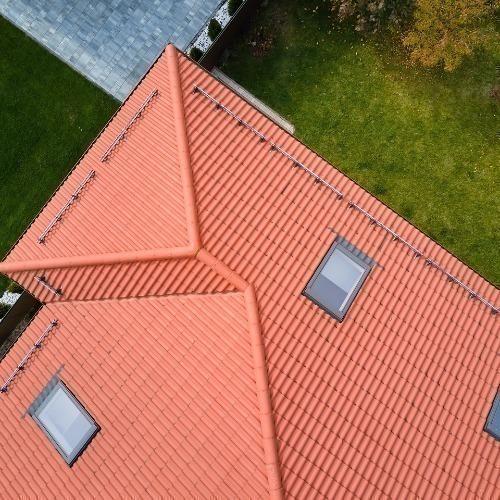
Material Selection: Asphalt, Metal, and Architectural Fit
Asphalt shingles remain a popular choice because they provide a balance of cost, durability, and style, offering color blends that complement brick, stone, and classic siding profiles. Architectural shingles add dimensional depth that boosts curb appeal while disguising minor irregularities in the roof deck. Alternatively, metal panels offer longevity and superior weather resistance, providing crisp lines that suit farmhouses, modern builds, and mixed-material exteriors.
Whichever material you choose, it is vital that the roof texture aligns with the home’s architectural language. By considering roof pitch, eave depth, and dormer placement, you can ensure that shingle exposure or standing seam spacing is properly scaled to visually enhance the entire home elevation.
Ventilation and Insulation: A Paired System
Roofs last longer and interiors remain more comfortable when attic conditions are balanced: cool in the summer and dry in the winter. Continuous intake at the soffits combined with exhaust at the ridge helps remove the heat and moisture that accelerate shingle aging and encourage mold growth.
Insulation complements this airflow by limiting heat transfer from the living spaces below. Together, proper airflow and thermal resistance reduce ice formation at roof edges, curb indoor humidity swings, and support even temperatures across the roof deck. This system results in quieter rooms, fewer seasonal odors, and roofing materials that age at a predictable pace.
Flashing Details and Water Pathways
Water rarely causes problems when it is provided with a clear path away from the structure. A layered defense consists of reliable drip edges, step flashing at sidewalls, and counterflashing at chimneys. Gutters should be sized appropriately for the roof area and installed with a proper slope to move runoff cleanly to the ground, while securely hung downspouts minimize splashback on the siding and foundation. Valleys require careful shingle weaving or metal liners to withstand concentrated water flows. Thoughtful detailing at skylights, vents, and pipe penetrations protects the most vulnerable areas and often determines whether a roof remains problem-free after a major storm.
Care Routines That Extend Roof Life
Consistent upkeep sustains appearance, performance, and peace of mind. Effective maintenance routines can be quite simple:
-
Walk the property after major weather events to spot lifted shingles, debris piles, or loose gutters.
-
Keep valleys and gutters clear so water cannot back up under shingles or along the fascia.
-
Trim limbs that overhang the roof to prevent scuffing, punctures, and organic buildup.
-
Check attic ventilation points for blockages and confirm that insulation is dry and level.
-
Note small issues, such as stains on ceilings, musty odors, or granular accumulation in gutters, and address them before they escalate.
A proactive, regular approach to care is always better than reacting to a crisis.
Color, Efficiency, and Neighborhood Harmony
Roof color influences both the style and the comfort of a home. Lighter shades can temper attic heat on sun-exposed slopes, while deeper tones anchor traditional facades and disguise minor surface variations. Modern granule technology and reflective finishes now allow for a broader range of choices without sacrificing aesthetic goals.
Beyond the individual home, it is important to consider the character of the neighborhood. Coordinating hues with nearby exteriors and landscape tones supports a cohesive streetscape. Selecting durable materials with energy-minded features pairs beauty with practical gains, often lowering the stress on mechanical systems and maintaining a calm interior environment during seasonal peaks.
Member Spotlight
Bealing Roofing & Exteriors, Inc.
440 Black Rock Rd, Hanover, Pennsylvania, 17331
717-634-3355
https://bealingroofing.com/
RESIDENTIAL ROOFING IN HANOVER stands out when experience meets dependable workmanship, and Bealing Roofing & Exteriors, Inc. delivers both. Bealing Roofing & Exteriors, Inc., based in Hanover, Pennsylvania, is the trusted choice for roofing and exterior services in south-central Pennsylvania and northern Maryland. The team provides 24/7 roof repair, replacement and installation, asphalt and metal roofing, siding installation, attic and roof insulation, chimney and masonry repair, gutter installation and repair, flashing repair, and ventilation solutions. For homeowners seeking guidance on RESIDENTIAL ROOFING IN HANOVER, the company’s Platinum Preferred Contractor status with Owens Corning underscores a commitment to quality materials and careful craftsmanship on every project.
